Heroic Team Platform Adventure

Reviews
Heroic Team Platform Adventure targets families who want a cooperative 2D platformer without a steep learning curve. The pirate-versus-samurai choice gives each playthrough a different feel, and the three missions—city, underground tunnels, and mine—offer enough environmental variety to keep the platforming from feeling repetitive. Simple controls and a gentle difficulty ramp suit younger players, while co-op scaling keeps group sessions engaging. The main limitation is that the source material does not specify online multiplayer, so players seeking that should verify platform details before buying.
Description
Ability Sets That Shape Every Move
Before the first jump, players pick between two ability packages: pirate or samurai. The pirate set leans on wide, sweeping attacks that can clear groups of enemies, while the samurai set rewards precise, single-target maneuvers. This decision locks in for the entire playthrough, so the same five heroes play differently depending on the package. Because the heroes share one ability set once chosen, mastery comes from learning the selected style rather than juggling individual character stats. That design choice gives the game a clear reason to replay: finishing as a pirate plays nothing like finishing as a samurai.
Three Missions, Three Distinct Spaces
The adventure is split into three primary missions, each with its own visual identity and platforming rhythm. Mission one drops the team into a bustling city filled with vertical platforms and tight alleyways. The second moves underground into a network of tunnels and chambers that demand careful navigation. The final mission descends into a mine, where complex pathways and environmental hazards raise the stakes. Enemy patterns and obstacle layouts shift with each location, so the game avoids repeating the same challenge twice. Progression is linear, which keeps the sense of advancement obvious from start to finish.
Co-op Built Around Shared Goals
Cooperative play lets friends or family members join the same session, working together to clear obstacles and defeat opponents. Some areas and simple environmental puzzles require teamwork, so communication matters more than individual skill. Difficulty scales to match the number of players, which keeps the experience engaging whether two people or a full group are playing. The co-op focus makes this a natural fit for group play, and the shared objectives give everyone a reason to coordinate rather than compete.
Controls and Difficulty for Younger Players
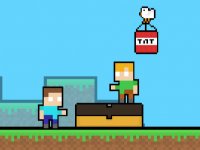
Controls use a simple layout that young players can pick up quickly. Running, jumping, and interacting with objects cover the basics, and special abilities map to a single button, so there is little to memorize. The difficulty curve is deliberately gentle. Early missions focus on basic platforming, while later stages ask for more precise timing and coordination. This structure builds confidence without overwhelming anyone, and the bright, colorful visuals—character designs inspired by classic animated series—keep important objects and pathways easy to identify. The tone stays upbeat and cooperative throughout, with no dark or frightening elements.



Editorial Notes