Tactical Armor Clash
Reviews
Tactical Armor Clash works best for players who enjoy short, competitive rounds that hinge on positioning and resource management. The mix of arena layouts and armored unit types keeps matches from feeling identical, and the simple two-player control scheme lowers the entry barrier. The main limitation is that the input does not describe online play or a single-player mode, so it is best suited for local matches between two people.
Description
Arena Layouts That Shape Every Duel
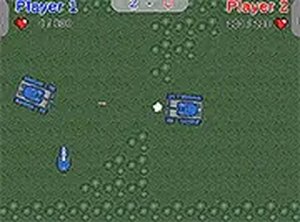
Each match in Tactical Armor Clash takes place in a different arena, and the arrangement of obstacles and open ground changes the tactical equation. Narrow corridors restrict movement and force close-quarters engagements, while wide sightlines reward players who can land shots from distance. Because the terrain shifts from one round to the next, a strategy that works in one arena may fail in another. Reading the layout before committing to an approach is part of the skill curve.
Choosing the Right Armored Unit
Before combat begins, each player selects from a roster of armored units. These units differ in handling characteristics and special equipment. Some favor speed and hit-and-run tactics, while others sacrifice mobility for heavier armor and stronger attacks. The selection phase matters because the right unit can counter an opponent's preferred style. Experimenting with different loadouts is part of the game's design, encouraging players to find what suits their instincts rather than sticking to a single choice.
Controls Built for Immediate Play
The control scheme is deliberately simple. One player moves with the WASD keys and uses a dedicated key for the primary action, while the other uses the arrow keys and a separate button. This setup lets new players start a match quickly, but timing attacks and evasive maneuvers still requires practice. The game runs on desktop computers and includes a full-screen mode for a more focused session.
Resource Management and Positioning
Ammunition is limited, so every shot carries weight. Players must decide when to fire and when to hold back, especially since staying mobile makes it harder for an opponent to land hits. Reckless movement, however, can leave a unit exposed. The match rewards those who balance aggression with caution, read their opponent's movements, and use the environment for cover. Adapting mid-match is often more important than executing a fixed plan.
Short Matches, Lasting Replay Value
Rounds are short enough to fit into a break but intense enough to encourage another attempt. The variety of arenas and unit types keeps matches from feeling identical. Because the game is free and runs in a browser, there is no barrier to starting another round after a loss. That structure creates a loop of learning, adapting, and improving over time.







Editorial Notes