Creative Spinner Customizer Studio
Reviews
Creative Spinner Customizer Studio is a straightforward creative outlet rather than a competitive game. Its strength lies in the layered design process: choosing a base model, painting sections, adding patterns and decorations, attaching extensions, and finishing with adjustable light effects. The absence of a timer or scoring keeps the focus on experimentation. It suits players who enjoy artistic customization and want a low-pressure browser activity. The main limitation is that the input does not describe any multiplayer, progression system, or challenge mode, so it should be approached as a solo design tool.
Description
Choosing a Base Model
Creative Spinner Customizer Studio starts with a selection screen where you pick a base model for your project. Each model has a different starting shape and structure, so the foundation you choose affects how the rest of your design comes together. Navigation uses touch or mouse clicks, and the interface keeps options visible without crowding the screen. Because there is no timer or countdown, you can compare models and settle on one without pressure.
Painting Each Section
Once a model is selected, painting tools become available. You can assign colors to individual sections of the spinner by tapping or clicking. The palette includes a wide range of shades, which supports both subtle gradients and bold contrasts. Changes appear on screen immediately, so you can judge how adjacent colors interact before committing. You can repaint sections as many times as you like, which makes experimentation low-risk and encourages trying combinations you might not choose on the first pass.
Patterns, Decorations, and Extensions
Beyond solid colors, the game provides a library of patterns and decorative items. Patterns range from simple stripes to more intricate motifs, while decorations include small shapes and symbols. You can layer these elements and place them on different parts of the spinner. Placement tools let you rotate or resize decorations to fit your intended layout. Extensions change the silhouette of the spinner by attaching to the base model. Some extensions are symmetrical, others create an asymmetrical profile, and each one snaps into place so you can see how it affects balance and overall look.
Light Effects and Viewing Your Design
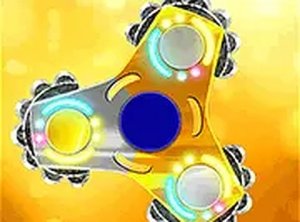
The final stage involves applying light effects. These add a subtle glow, shimmer, or reflective quality to the surface. Several effect types are available, each producing a different visual outcome, and intensity is adjustable. Light effects interact with the colors and patterns already applied, so the finishing step can change how the whole spinner reads. After you are satisfied, you can view the completed design from multiple angles. There is no scoring or competitive element; the game focuses on the act of creation itself.




Editorial Notes