Mien Bugr Skate Home Adventure
Reviews
Mien Bugr Skate Home Adventure targets players who want a light, cooperative arcade experience without a steep learning curve. The left-and-right control scheme and immediate fail-on-contact rule create tension through timing rather than complexity. The coin system gives each run a secondary goal beyond survival, and the changing creature placements keep levels from feeling identical. The main limitation is that the source material does not describe any additional modes, characters, or difficulty settings, so the experience appears focused and brief rather than expansive.
Description
Two Pets, One Goal
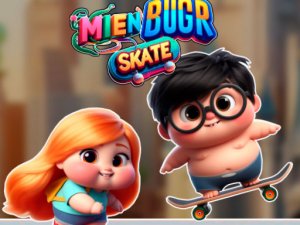
Mien Bugr Skate Home Adventure casts players as a pink pet and a brown pet who have wandered into the streets and need to skate back home. The premise is simple and warm: reunite both animals with their house. Each pet rides a skateboard, and the game supports two players at once, so cooperation is built into the core design rather than added as an extra mode. The tone stays bright and approachable, which makes the objective easy to understand from the first screen.
Skating, Dodging, Collecting
Control is limited to left and right movement along the street. That narrow input set keeps the game accessible, but it also means every decision matters: shift too late and a creature catches the pet, shift too early and you may miss a line of coins. Gold coins raise the score and unlock new levels, so there is a constant pull between playing safe and taking a slightly riskier path. Playful creatures appear in different spots on each stage, and the game ends immediately if one catches a pet. [IMG_1]
Level Variety and Difficulty Curve
Stages are not simple repeats of the same layout. Each level introduces new routes and different creature placements, which forces players to read the screen instead of memorizing a single safe pattern. Because the game ends on contact, the difficulty comes from timing and positioning rather than from complex controls. That design suits short sessions and makes failure feel like a reflex error rather than a punishment. [IMG_2]
Playing Together
With two players, the game becomes a coordination exercise. One player can draw a creature's attention while the other slips past, or both can focus on collecting coins before the path narrows. The cooperative framing matches the story: the pets are trying to get home together, not compete against each other. It is a straightforward setup that works well for siblings, friends, or a parent and child sharing a screen.






Editorial Notes