Pizza Rush: Time Management Game
Reviews
Pizza Rush: Time Management Game delivers a focused simulation of a busy pizzeria drive-thru. Its strengths lie in the hiring mechanic and the escalating order pace, which together create a satisfying loop of task delegation and prioritization. The bright visuals and simple mouse controls make it approachable for casual players and families. The main limitation is the lack of confirmed platform details or multiplayer options, but as a single-player time management challenge, it offers a clear and engaging experience for fans of cooking and strategy games.
Description
Running the Drive-Thru
Pizza Rush centers on a single busy drive-thru window where customers arrive with orders. Your job is to note each request, route it to the right station, and hand over the finished pizza before the customer gives up. The game uses simple mouse clicks, so the difficulty comes from timing and prioritization rather than complex inputs. Every decision affects how smoothly the line moves.
Staffing and Task Delegation
A hiring mechanic lets you build a team of employees, each capable of handling specific duties. Assigning staff to separate jobs—preparing food, taking payments, or passing orders to customers—allows several tasks to happen at once. This makes delegation the core strategic layer: a well-organized team prevents bottlenecks, while poor assignment creates delays that ripple through the queue.
Escalating Pace and Difficulty
Orders arrive in an endless stream, and the pace gradually increases as you progress. Early on, there is time to think between customers. Later, the queue grows faster than you can handle alone, forcing you to refine your workflow. The game rewards efficient planning and quick thinking, and the difficulty curve is designed to push you toward better coordination rather than raw speed.
Visual Style and Accessibility
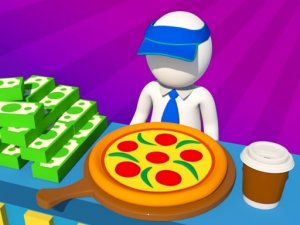
Bright, colorful visuals keep the pizzeria cheerful and approachable for all ages. There are no violent or stressful elements, which makes the game suitable for casual play and family audiences. The controls are intuitive, so new players can focus on strategy instead of learning a complicated interface. The experience is lighthearted but still demands attention and organization.









Editorial Notes