Route Sketch Puzzle Adventure
Reviews
Route Sketch Puzzle Adventure is a physics-based drawing puzzle with a clean stickman look and a relaxed pace. The core loop—sketch a continuous line, then tap to send the vehicle rolling—is easy to grasp, but later stages introduce chasms, slopes, and multi-segment routes that demand careful planning. Collectible stars reward optimal paths and give a reason to revisit levels. It suits younger players and adults who enjoy logic puzzles without time pressure. The main limitation is that the input does not describe any additional modes or features beyond the single-player puzzle stages.
Description
Sketching the Route
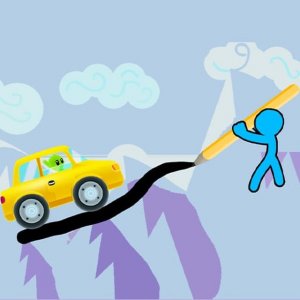
Route Sketch Puzzle Adventure casts you as a route planner for a small vehicle. The goal is simple: draw a continuous line that bridges the gap between the vehicle and the finish flag. That line must be sturdy enough to support the vehicle as it moves. You sketch with a mouse or touch input, then tap to set the vehicle in motion. A well-planned line lets it roll smoothly to the goal; a poorly designed one may cause it to stop or fall.

Terrain and Level Challenges
Stages vary in layout and demand different approaches. Early levels might feature a simple gap that calls for a straight line. Later stages introduce elevated platforms separated by a wide chasm or a steep upward slope that requires a carefully angled path. Some levels include multiple segments, so you connect several lines into one continuous route. Difficulty rises gradually, letting you build skills over time. Each stage is a small puzzle that asks you to analyze the space and design an efficient solution.

Minimalist Look and Calm Pace
The game uses a clean stickman art style with simple lines and bright colors, making the vehicle and obstacles easy to distinguish. Uncluttered backgrounds help you focus on the drawing task. There are no distracting animations or loud sound effects, and the overall atmosphere is calm and unhurried. This visual approach suits younger players while still appealing to adults who appreciate a clean design.

Stars and Replay Value
Completing a level is satisfying, but each stage also includes collectible stars earned by drawing an optimal path. These stars encourage replaying levels and experimenting with different line shapes and lengths. Chasing a perfect three-star run adds challenge without time pressure or frustration. The system gives the game a gentle difficulty curve, so you can progress at your own pace while still having a reason to revisit earlier stages.









Editorial Notes