Ben 10 Difference Challenge Puzzle
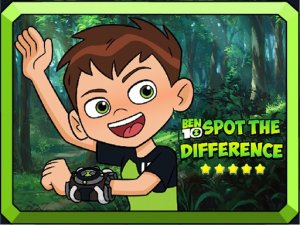
Casual Puzzle Spot the Difference Observation Family-Friendly Ben 10
Ben 10 Difference Challenge Puzzle
109
Developer: Current Veil Digital
Published: 1766851200
Updated: 2026-10-01

Reviews

Ben 10 Difference Challenge Puzzle does one thing clearly: it puts two similar images side by side and asks you to find what changed. The timed format and shrinking differences give it a difficulty curve, while hints offer an escape hatch at a scoring cost. It suits younger players and Ben 10 fans who want a calm observation game rather than action. The main limitation is that its appeal depends on how much you enjoy comparing static images.

Description

Comparing Images Under Time Pressure

Each stage places two nearly identical pictures side by side, drawn from Ben Tennyson's universe and his alien transformations. Your job is to scan both images, spot where they diverge, and click those spots. A correct click circles the area and adds points. The round ends when you find every difference or the timer runs out, so speed and accuracy compete directly.

How Difficulty Scales

The gap between images narrows as you progress. Early differences are easy to catch, while later ones hide in small shifts of color, shape, or object position. That progression turns the game into a test of systematic scanning rather than lucky glances. The difficulty curve is the main reason the puzzle stays engaging across multiple levels.

Hints and Scoring Trade-offs

A hint system is available when you get stuck, but using it lowers your score. That creates a real decision: push through a stubborn difference yourself, or spend points to keep moving. Players who want high scores should treat hints as a last resort, while younger or newer players can lean on them to finish levels without frustration.

Who This Puzzle Suits

The content is family-friendly, with no violence or inappropriate material, and the controls are simple taps or clicks. That makes it accessible for children and Ben 10 fans, but the timed format and shrinking differences also give older players a reason to replay for better scores. It is a casual observation game first, and a fan tribute second.


Editorial Notes

Compatibility

💻 Desktop | 📱 Mobile | 📟 Tablet
– All supported · Best with Chrome or Safari

Faq

Does Ben 10 Difference Challenge Puzzle have a time limit on every level?
Yes. Each level is timed, and the goal is to find all differences before the timer runs out. The timer adds pressure to your scanning, so you cannot study the images indefinitely. If you run out of time, you will need to retry the level.
Can I play Ben 10 Difference Challenge Puzzle without using hints?
You can, and doing so protects your score. Hints are optional assistance for when a difference is too subtle to find. Skipping them entirely is the better choice for players chasing high scores, but using them is fine if you just want to complete a level.
Is Ben 10 Difference Challenge Puzzle suitable for young children?
The game is designed for children and Ben 10 fans. Its content is family-friendly with no violence or inappropriate material, and the controls are simple tap or click actions. The timed levels and shrinking differences may still challenge very young players, but the hint system helps them progress.
How does the scoring work in Ben 10 Difference Challenge Puzzle?
You earn points for each correct difference you click. Using a hint reduces your score, so the final total reflects both your observation speed and your independence. Finding all differences before time expires is the primary way to maximize your points on any level.
Do the differences get harder to spot as I advance?
Yes. The game increases difficulty across levels, and later differences become smaller and harder to notice. Early stages are more forgiving, while advanced stages require closer attention to colors, shapes, and object positions. This progression is what gives the puzzle its lasting challenge.
What skills does Ben 10 Difference Challenge Puzzle help improve?
The game is built around attention to detail and visual comparison. Scanning two images for small changes trains observation and patience. Because levels are timed, it also encourages faster, more systematic scanning rather than random clicking, which is a useful habit for spot-the-difference puzzles generally.