Polygrams Geometric Puzzle Game

Reviews
Polygrams is a geometric puzzle game that strips away timers and scores to focus on spatial reasoning. You drag polygonal pieces into place to complete a picture, with puzzles growing more complex as you progress. The lack of pressure makes it ideal for casual players or anyone who wants a low-stress mental workout. The main limitation is that the input does not specify the number of puzzles or whether pieces can be rotated, so some details remain unclear. Still, its accessible controls and colorful shapes give it broad appeal.
Description
Shape-Fitting Logic
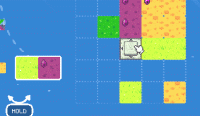
Polygrams asks you to assemble a complete picture from colorful polygonal pieces. Unlike a jigsaw puzzle, the pieces are geometric forms rather than interlocking tabs. The core task is to drag each shape onto the board and position it so that every piece fits without overlap. There are no timers or scores, so the only pressure comes from your own spatial reasoning. The game leans on pattern recognition: you look at the overall silhouette, identify corners or edges that suggest a starting point, and work outward.
Controls and Interaction
Click the play button to load a puzzle, then use your mouse or touch screen to drag pieces. You can rotate shapes mentally or test placements by dropping them. The controls are intuitive enough that no tutorial is needed. Because the game runs in a web browser, it works on any device with a browser, from desktop to tablet. There is no installation or account requirement mentioned.
Progression Without Pressure
Puzzles become more complex as you advance, but the difficulty curve is gentle. Early boards use fewer pieces or simpler outlines; later ones demand more careful spatial planning. The absence of a timer means you can leave a puzzle and return later. That design supports short sessions or long ones equally. The game is accessible to players of all ages, though the later stages will reward those who practice regularly.
Visual and Replay Value
The polygonal shapes are colorful, and the interface stays out of the way. Each puzzle is unique, so replaying means solving new arrangements rather than memorizing a single solution. If you get stuck, the game encourages taking a break and coming back with fresh eyes. That makes it a low-stress option for casual play, but the underlying logic keeps it from feeling mindless.






Editorial Notes