Arithmetic Intersection Challenge
Reviews
This game turns arithmetic drills into an engaging puzzle experience. The traffic light mechanic provides a clear goal and immediate feedback, making each correct answer satisfying. Difficulty ramps up nicely, ensuring both newcomers and math enthusiasts find a suitable challenge. The simple visuals keep the focus on the core gameplay, and the timed rounds add just enough pressure to stay exciting without becoming frustrating.
Description
Core Gameplay Loop
At its heart, this title combines mental arithmetic with a traffic management scenario. Players see a math problem tied to a specific lane of waiting vehicles. Selecting the correct solution triggers a green light for that lane, while other lanes remain red. The challenge lies in performing calculations quickly under the pressure of growing traffic.
Difficulty Progression
As players advance, the arithmetic problems become more complex, requiring faster responses. Early levels might involve simple addition or subtraction, while later stages introduce multiplication and division. This gradual increase helps build confidence before introducing tougher challenges. The time limit per level also tightens, demanding both speed and precision.
Visual and Interactive Design
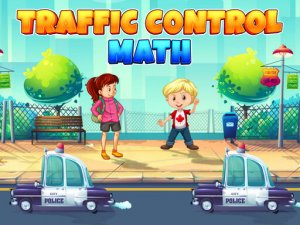
The interface presents a clear view of the intersection, with each lane color-coded to indicate its status. Vehicles animate smoothly when given a green light, providing satisfying feedback. The layout is designed to minimize distraction, allowing players to focus on the math problem at hand. Bright colors and simple icons make the game accessible to all ages.
Learning Through Play
This game serves as a practical tool for practicing arithmetic in a fun context. By tying each correct answer to a visible outcome—cars moving forward—players receive immediate positive reinforcement. The pressure of timed rounds encourages mental math skills to develop naturally. Parents and educators may find it useful for reinforcing basic math concepts outside of traditional drills.
Replay Value and Mastery
With multiple difficulty settings, players can revisit earlier levels to improve their scores or attempt harder modes for a greater challenge. The game tracks performance, allowing users to see their progress over time. Achieving a perfect run on a difficult level provides a sense of accomplishment. This structure encourages repeated play without becoming repetitive.
✅ Compatibility & Testing
Faq
Is Arithmetic Intersection Challenge suitable for young children?
Can I play this game offline?
Are there different difficulty modes?
How long does a typical game session last?
Does the game include any competitive elements?
What math operations are covered in the game?
Similar Titles

Hidden Object Puzzle Quest
A relaxing and engaging hidden object game that is perfect for players of all ages. Great for short breaks.

Waiter House Escape Puzzle
A relaxing point-and-click escape game with clever puzzles and no time pressure. Perfect for puzzle lovers.

FlappyCat Steampunk Arcade Challenge
A charming steampunk arcade game with simple controls and a creative visual theme that keeps you coming back.

Shutter Escape Puzzle Game
A calm and clever point and click puzzle game that rewards patience and observation.

Hidden Coin Puzzle Adventure
A relaxing hidden object puzzle game with charming graphics and no time pressure. Great for family fun.

Fruit Slicer Frenzy Arcade
A fun, fast-paced fruit slicing game with colorful visuals and global leaderboards. Great for quick play sessions.

Room Escape Puzzle Adventure
A relaxing point-and-click puzzle game with colorful rooms and clever challenges for all ages.

3D Path Logic Puzzle
A clever 3D puzzle that challenges your planning skills. Simple to learn but hard to master.
Comments
0 comments