FlappyCat Steampunk Arcade Challenge
Reviews
FlappyCat Steampunk Arcade Challenge succeeds by keeping its scope narrow. One input, one objective, and a speed curve that punishes panic rather than lack of knowledge. The steampunk setting — gears, pipes, whimsical machinery — gives the endless format a visual identity that most arcade flyers lack. It suits players who enjoy rhythm-based precision and short sessions. The limitation is inherent: anyone wanting variety, upgrades, or story will find none here.
Description
One-Button Flight, Real Consequences
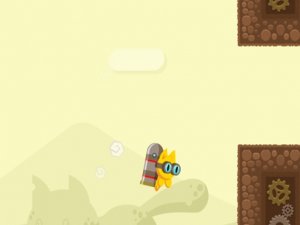
FlappyCat Steampunk Arcade Challenge reduces its control scheme to a single input: tap or click to fire the jetpack and rise, release to let gravity pull the cat back down. That is the whole vocabulary of the game. The difficulty lives entirely in when you press and how long you hold, not in learning combos or menus. Because the character keeps moving forward on its own, every tap is a commitment — overshoot and you clip the top of a gap, hesitate and you drop into the bottom. The design rewards players who treat the jetpack like a throttle rather than a jump button.
Reading the Steampunk Sky
Obstacles arrive as part of a world built from gears, pipes, and whimsical machinery, and the visual theme is the game's clearest point of difference from a standard arcade flyer. Gaps sit at different heights, so the useful skill is scanning the next two or three obstacles rather than reacting to the one directly ahead. Each clean pass adds a point, and the scroll speed increases as your score grows, which shortens the window you have to adjust. Background elements and machinery reinforce the setting without changing the rules, so the steampunk look is atmosphere rather than a mechanic.
Where Runs Fall Apart
Most failed attempts share a cause: erratic tapping. Players who panic when the speed rises tend to over-correct, firing the jetpack in short bursts that send the cat bouncing between the top and bottom of a gap. Small, measured inputs hold a steadier line. The game is non-violent and built for short sessions, so a run can last seconds or several minutes depending on how long you stay composed. High score tracking gives each attempt a purpose, and visual feedback on passes and collisions tells you exactly where a run ended.







Editorial Notes