Stack Climb 2: Arcade Platform Runner

Reviews
Stack Climb 2 delivers a straightforward arcade challenge: land on platforms to build a stack and climb higher. Its strength is the clean feedback loop—one missed jump ends a run, but restarting is fast. Progressive difficulty keeps later attempts from feeling identical. The colorful visual style supports readability. It suits players who enjoy timing-based skill games and short sessions, though those seeking story or customization will find little here.
Description
Building a Path by Stacking Platforms
Stack Climb 2 is an online arcade game centered on a single, clear objective: create a vertical path by stacking platforms. You control a character who moves left or right, and each successful landing on a platform adds it to your growing stack. The higher your stack, the higher you climb. There is no complex setup or story to learn; the challenge comes entirely from timing and positioning. Because the game runs in a browser, you can start a run instantly without downloads or installations.
Controls and Moment-to-Moment Decisions
On a keyboard, arrow keys move your character left and right. On a mobile device, touch gestures serve the same purpose. The core decision in every run is when to jump. You must judge the position of the next platform and time your jump so you land on it. A missed jump or an avoided platform ends the current run. This simple loop creates constant, low-stakes tension: one mistimed input resets your progress, but restarting is quick enough to encourage another attempt.
Progressive Difficulty and Platform Behavior
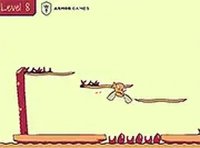
As you climb, platforms may move or appear in trickier spots. This progressive difficulty means early jumps are straightforward, while later ones demand quicker reflexes and better planning. You cannot rely on a single rhythm; instead, you must read each platform's position and adjust. The game rewards spatial awareness and persistence. Players who practice regularly tend to chain jumps more reliably and build taller stacks, but improvement comes from repetition rather than unlocks or upgrades.
Visual Style and Accessibility
The game uses a colorful, lively arcade aesthetic. Bright visuals make platforms easy to distinguish from the background, which matters when you need to track multiple moving elements. The intuitive design keeps the focus on movement and timing rather than menus or tutorials. Because it is an online arcade title, it appeals to casual players taking a short break as well as those who enjoy skill-based challenges. Sessions are brief by nature, and the difficulty curve ensures each climb feels distinct.








Editorial Notes