Hue Reaction Puzzle
Reviews
Hue Reaction Puzzle strips its design down to one rule and one input, then lets speed do the work of creating difficulty. That restraint is its strength: there is nothing to learn except the color relationship, so improvement comes from sharper attention rather than memorization. The likely audience is casual players who want a short, repeatable challenge that tests focus and hand-eye coordination. The main limitation, based on the input, is a lack of confirmed variety beyond shifting wall patterns and colors — players seeking deep progression or story should look elsewhere.
Description
The Core Color Rule
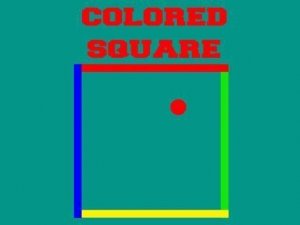
Hue Reaction Puzzle builds its entire challenge around one deceptively simple rule: never let the ball touch a wall that shares its current color. The ball moves continuously toward walls, and a single tap redirects it. The twist is that both the ball and the walls can change hue, so you must track two colors at once — the ball's and the approaching wall's. A matching collision ends the round immediately.
How a Round Unfolds
Each attempt starts at a manageable pace, giving you time to read the screen and understand the color relationships. As you survive, the speed climbs. Walls and ball colors shift, so the safe path is never fixed. You are not memorizing a layout; you are constantly re-evaluating which walls are dangerous right now. That constant re-evaluation is what keeps every round feeling different, even though the underlying mechanic never changes.
What Makes It Demanding
The difficulty comes from divided attention. You need to watch the ball's color, scan the next wall's color, and time a tap — all before the gap closes. Early on, there is enough time to think. Later, the game rewards anticipation over reaction. Players who tap early, based on where the ball is heading rather than where it is, tend to last longer. Calmness matters as much as speed, because panic taps often send the ball into a matching wall.
Who It Suits
This is a lightweight, pick-up-and-play game. There are no complex controls, no story, and no steep learning curve — just a single tap action and a clear visual rule. It fits short breaks as well as longer sessions, and it appeals to players who enjoy mental exercises that combine visual processing with motor response. The clean presentation keeps distractions low, so the color challenge stays the focus.






Editorial Notes