Happy Eye Arcade Idle Game
Reviews
Happy Eye Arcade Idle Game delivers exactly what its name suggests: a casual, idle-friendly arcade experience built on a single flap input. The strength is its focus—no power-ups, no complex rules, just timing and rhythm. Bright, family-friendly visuals and instant restarts make it easy to pick up for short breaks. Players who prefer steady, practice-based improvement over frantic reaction will get the most from it. The main limitation is the lack of variety beyond increasing difficulty, but that is consistent with its minimalist design.
Description
Core Flapping Mechanic
Happy Eye Arcade Idle Game centers on a single input: press a key or tap to make the character flap upward, release to let it descend. That is the entire control scheme. The challenge comes from reading the gap ahead and timing each flap so the character slips through without touching a barrier or the ground. Each successful pass adds one point to your score, and the round ends immediately on contact. There are no power-ups, no alternate routes, and no complicated combos—just a steady rhythm of taps and releases.
Session Structure and Idle Appeal
Rounds are short by design. A failed attempt restarts with a single press, so the gap between tries stays minimal. This quick loop suits short breaks as well as longer play sessions, and the idle-friendly label reflects how little setup or commitment each run requires. Because the game tracks your best score, every attempt has a clear target: beat your own record. The difficulty rises as paths become trickier, but the rules never change, which keeps the experience accessible for players of all ages.
Visual Style and Tone
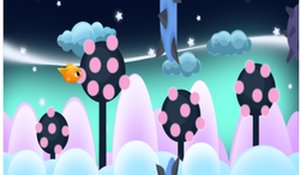
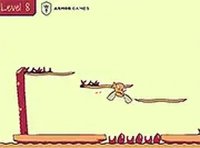
The presentation is bright and colorful, built around a cheerful character with a prominent eye. Obstacles are clearly distinguishable from the background, which matters when split-second timing decides whether a run continues. There is no violent content, and the overall tone stays lighthearted. The art direction supports the gameplay rather than distracting from it—players can focus on the next gap instead of parsing busy visuals.
Building Consistency Over Reflexes
Success depends less on frantic tapping and more on finding a repeatable rhythm. Watching the gap ahead and anticipating flap height early tends to work better than reacting at the last moment. Regular practice sharpens distance judgment, and short breaks help maintain precision when frustration builds. Each attempt is a chance to refine timing, so gradual improvement is the natural path to higher scores.





Editorial Notes