Rebound Trajectory Challenge
Reviews
Rebound Trajectory Challenge is a physics-based puzzle game where you launch a sphere to collect a marker and reach an exit. The sphere bounces off walls and barriers, and you cannot control it mid-flight. This makes each level a planning problem. Early levels teach basic bouncing, while later ones add angled panels and narrow passages. The gradual difficulty curve and lack of timers or penalties create a relaxed but engaging experience. It suits players who enjoy logic puzzles and experimentation. The main limitation is that the core mechanic stays the same throughout, so variety depends on level design.
Description
Core Mechanic and Player Goal
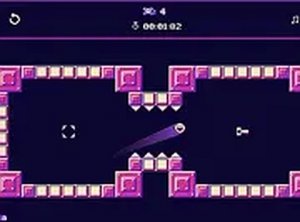
Every level in Rebound Trajectory Challenge is a closed environment with walls, barriers, and one exit point. You launch a sphere from a starting position. The sphere must first collect a glowing marker and then reach the exit door. It moves according to realistic physics, bouncing off surfaces at predictable angles. You cannot steer it once it is in motion. The only decisions are launch direction and force. This turns each level into a planning problem rather than a reflex test.
Level Design and Difficulty Curve
Early levels use simple layouts with straight walls and few obstacles. They teach you how the sphere reacts to different surfaces. Later levels add angled panels, narrow passages, and multiple barriers that require multi-bounce sequences. Each new element increases complexity without overwhelming you. The difficulty rises gradually, so every puzzle feels like a natural next step. Completing a tricky layout gives a real sense of accomplishment.
Visual and Audio Feedback
The game uses a clean, minimal look with bright colors and clear visual cues. Walls are outlined distinctly, and the sphere stands out against the background. The exit door glows softly, making it easy to spot. Sound effects are subtle: a soft thud when the sphere hits a wall and a cheerful chime when you collect the marker or reach the exit. This restrained audio design keeps your focus on the puzzle during critical shots.
Experimentation and Session Length
Most levels have no single correct path. You are encouraged to try different launch angles and power levels. Sometimes a gentle tap is right; other times a strong rebound off multiple walls works better. Observing the layout before acting helps you identify routes. Failed attempts are not wasted—each one teaches you about the sphere's behavior or the level's geometry. Each puzzle can be solved in under a minute once you know the solution, but discovery may take several attempts. There is no timer or score pressure, so you can take as long as you need. After finishing all levels, you can revisit earlier stages to try for more efficient paths.







Editorial Notes