Culinary Tile Swap Puzzle
Reviews
Culinary Tile Swap Puzzle strips match-3 down to a quiet logic exercise. There is no timer, so you can plan each swap into an empty space and watch chains of food tiles clear. Difficulty rises through tighter layouts rather than speed. Move-based scoring gives reason to replay earlier boards. Best for players who want a relaxed mental workout on a browser, not a frantic arcade race.
Description
Matching Food Tiles by Swapping
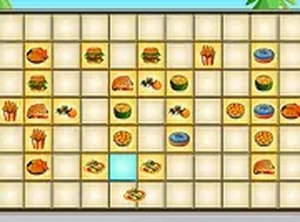
The board holds a grid of food icons. You select one tile and slide it into an adjacent blank spot. After the move, the game checks for any straight line of three or more matching food items. Those tiles disappear, and the pieces above or beside them shift into the empty spaces. That shift often creates fresh groupings, so a single swap can trigger a chain of removals. The objective is to clear every tile from the board.
No Clock, No Rush
Unlike many match-3 games that pressure you with a countdown, this one has no time limit. You can study the layout for as long as you need before each move. That design supports careful planning and lets you test different sequences to see which one clears the most tiles in a single turn. The absence of a timer also makes the game approachable for younger players or anyone who prefers a calm mental workout.
How Difficulty Grows
Early boards are simple and teach the basic swap-and-match rule. Later puzzles use tighter layouts and fewer obvious matches, so you have to think several moves ahead. The difficulty rises gradually, which keeps the challenge fresh without becoming frustrating. Each new board functions as a fresh logic problem rather than a speed test.
Look and Feel
The graphics rely on bright, clean food icons with distinct colors and shapes. That clarity helps you spot potential matches quickly. The interface stays minimal, with no distracting animations or clutter. The game runs smoothly on most browsers and devices, so the experience stays consistent whether you play on a computer, tablet, or phone.
Scoring and Replay
After you clear a board, your score is based on the number of moves you used. Fewer moves produce a higher score. That system adds replay value because you can return to earlier puzzles and try to beat your previous record. It rewards efficient thinking and encourages you to find clever sequences. Over time, regular play can sharpen your pattern recognition and planning skills.








Editorial Notes