Sum Grid Logic Challenge
Reviews
Sum Grid Logic Challenge focuses on a single, well-defined task: fill a 5x5 grid so every row, column, and diagonal matches a target sum. The immediate color feedback and free rearrangement make it forgiving for learners, while the gradual reduction of pre-filled numbers provides a steady difficulty curve. With no timers or scores, it suits children and adults who want a low-pressure arithmetic workout. The main limitation is that it offers one core mechanic, so players seeking varied puzzle types may find it repetitive over time.
Description
Building the Grid
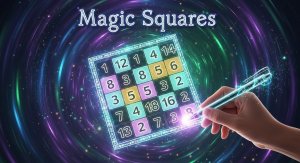
Sum Grid Logic Challenge starts with a five-by-five board. Some cells already contain numbers; the rest are empty. A target sum sits at the top of the screen. Your job is to drag numbers from a tray into the empty cells so that every horizontal row, vertical column, and both main diagonals add up to that same total. The puzzle mixes basic addition with spatial planning, because each placement affects several lines at once.
Real-Time Feedback
After you drop a number into a cell, the game immediately checks the sums of the row, column, and diagonal that pass through that cell. If all affected lines match the target, the cell turns green. If any line is off, the cell turns red. This instant visual response lets you see mistakes right away and adjust without guessing. You can move numbers between cells as often as you like, so experimenting is part of the process.
Progression and Difficulty
Solving a grid correctly unlocks the next puzzle. Early puzzles come with more pre-filled numbers, which makes them easier to complete. As you advance, fewer numbers are given, so you have to work out more placements yourself. The game does not track time or score, so you can solve at your own pace. A hint button is available when you get stuck; it places one correct number into a suitable cell. Using hints occasionally can help you notice patterns while still solving most of the puzzle on your own.
Designed for Shared Play
The interface uses bright colors and large, readable numbers. There are no timers or competitive elements, so several people can take turns on the same device. The game works with both mouse and touch input, making it comfortable on desktop computers, tablets, and phones. Because it only requires basic addition, children can enjoy it, but the later puzzles offer enough challenge for adults.







Editorial Notes