Galaxy Pair Recall
Reviews
Galaxy Pair Recall keeps its scope tight: flip cards, find pairs, and watch the grid expand from four-by-four to eight-by-eight. The absence of timers and lives makes it unusually welcoming for children and adults who want a low-stress mental workout. Hand-drawn space icons and gentle audio support the relaxed pace. The main limitation is that the core loop never changes, so players seeking variety or competitive pressure may find it too gentle.
Description
How the Matching Works
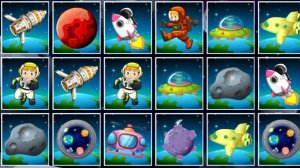
Galaxy Pair Recall places a grid of face-down cards in front of you. Each card hides a space-themed icon such as a crescent moon, satellite, or friendly alien. You turn over two cards per turn. If the icons match, both stay face-up and reveal a piece of the cosmic backdrop. If they don't, the cards flip back, and you rely on memory to avoid repeating the same mismatch. That reveal-recall-match cycle is the entire foundation of the game, and it stays consistent from the first board to the last.
Grids That Grow With You
Early boards use a compact four-by-four layout, which keeps the first few sessions welcoming. As you advance, the grid expands to six-by-six and eventually eight-by-eight arrangements. Larger boards demand sharper concentration and better spatial tracking, but the difficulty curve feels gradual rather than punishing. Each new layout offers a fresh challenge without overwhelming the player, which helps the game stay engaging across longer play sessions.
Visuals, Sound, and Atmosphere
Vibrant hand-drawn icons sit against a dark starry background. Matched pairs trigger subtle animations like a twinkling star or drifting nebula, giving a small visual reward for each correct find. The interface stays clean, with large tappable cards that work on desktop monitors and mobile screens alike. Soft ambient background music and gentle flip-and-match sound effects create a relaxing mood that supports focused play rather than distracting from it.
A Pace That Respects Your Time
There are no countdown timers, limited lives, or high-pressure scoring systems. You can take as long as you need between moves, which makes the game suitable for children developing concentration and for adults wanting a low-stress mental workout. Controls work with mouse clicks or touch taps, so a session can last two minutes or twenty depending on your schedule. That pick-up-and-play design fits easily into a busy day.
What Regular Play Exercises
Tracking multiple icon positions at once exercises short-term visual memory and pattern recognition. The game doesn't lecture or test you; it simply provides a fun context for repeated practice. Over time, many players notice improved recall in daily life, such as remembering where they left keys or recognizing faces more quickly. That gentle cognitive boost is a welcome side effect of an already enjoyable activity.






Editorial Notes