Color Sort Puzzle Game
Reviews
Color Sort Puzzle Game delivers exactly what its name suggests: a clean sorting puzzle with a single rule and no time pressure. The move counter adds a light challenge for players who want to optimize, while the absence of penalties keeps it accessible. The difficulty curve is built on adding more colors and tubes, not on artificial obstacles. It suits casual players and puzzle fans who prefer thinking over reflexes.
Description
Sorting Mechanics and Rules
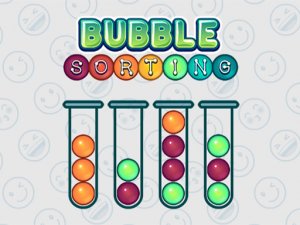
Each level begins with several vials containing mixed colored bubbles. Your job is to transfer the top bubble from one tube to another, following a single rule: a bubble can only be placed on an empty tube or on top of a bubble of the same color. This constraint turns every move into a small decision. Because you can only move the topmost bubble, the order in which you empty and refill tubes matters. The game counts your moves, giving you a clear measure of how efficiently you solved each arrangement.
Progression and Difficulty Curve
Early levels use a small number of colors and tubes, so solutions are quick to spot. As you advance, additional colors and tubes appear, which multiplies the possible interactions and makes planning further ahead necessary. There is no timer or move limit forcing you to rush, but the increasing complexity means a careless move can leave a tube locked under a color you need later. The difficulty comes from the puzzle design itself, not from artificial pressure.
Controls and Session Flow
Interaction is limited to tapping or clicking: select a tube, then select a destination. That simplicity means you can play with one hand and pick up or pause at any moment. Levels are short enough for a break but can be chained together for a longer session. The absence of timers or penalties for restarting keeps the experience low-stress, while the move counter gives players who want a challenge a way to measure improvement.
Visual Style and Atmosphere
Bright, distinct bubble colors make it easy to read the board at a glance, which matters when several tubes are in play. The overall presentation is calm and uncluttered, matching the relaxing tag. There is no narrative or competitive pressure; the appeal is in the quiet satisfaction of watching a messy set of tubes resolve into neat single-color columns.







Editorial Notes