Tiny World Discovery Clicker
Reviews
Tiny World Discovery Clicker strips away scores, timers, and goals, leaving only a magnifying glass and a miniature city that reacts when you hover over it. That simplicity is both its strength and its limit. Players who enjoy unhurried observation will find a genuinely calm experience with enough session-to-session variation to justify returning. Those who need objectives or difficulty will find little to hold their attention. It is a narrow but honest design.
Description
What You Actually Do
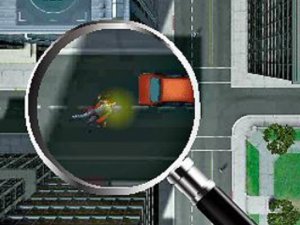
Tiny World Discovery Clicker has no goals, scores, or timers. You move a magnifying glass across a miniature city using a mouse or touchscreen. Hovering over a person, dog, car, or helicopter triggers an immediate reaction. The game is built around that single loop: focus on something, watch what happens, move on. Because reactions can vary between sessions, the same object might not behave identically each time you open the game. That variability is the main reason to return.
How the City Responds
The miniature world is populated with everyday activity: people walking, dogs playing, cars driving, and helicopters flying. Each element is designed to respond when the magnifying glass passes over it. The feedback is visual and instant, so there is no delay between your movement and the city's response. There are no instructions to follow, which means the only way to learn what an object does is to try it. Players who move slowly tend to notice more interactions than those who sweep quickly across the screen.
Designed for Unhurried Sessions
The game is explicitly family-friendly and contains no violence or inappropriate content. It suits short breaks as well as longer, relaxed sessions. The interface is simple enough for young children to use without help. There are no ads and no complex rules. Closing and reopening the game can produce a different set of reactions, which gives each session a reason to be slightly different from the last.
Who It Suits
This is a game for players who want observation without pressure. If you prefer clear objectives, difficulty curves, or progression systems, the absence of those elements will feel like a limitation. If you enjoy noticing small details and experimenting without consequences, the game's open structure works in its favor. The appeal is narrow but genuine: it rewards patience and curiosity rather than skill.










Editorial Notes