Dino Quest: Fossil Discovery Puzzle
Reviews
Dino Quest: Fossil Discovery Puzzle targets players who want their puzzle-solving to teach them something. The core loop—choose a continent, match tools to terrain, excavate bones, assemble skeletons—is simple but grounded in real paleontology. The museum provides a clear sense of progression, and the facts tied to each dinosaur add educational weight. The main limitation is that the input does not describe difficulty scaling or replay incentives, so the long-term challenge may depend on how many dinosaurs are available to collect. Best for casual players and dinosaur enthusiasts who value learning alongside play.
Description
Digging Through Prehistory
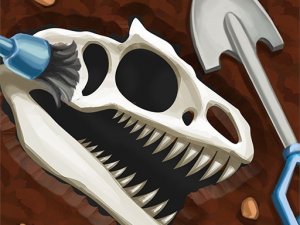
Dino Quest: Fossil Discovery Puzzle casts you as a paleontologist working across Africa, Asia, the Americas, Australia, and Europe. Each continent holds dig sites with fossils from dinosaurs that actually lived in those regions. The fossil placements are based on real discoveries, so the geography reflects genuine paleontological records rather than random scatter.
Tools, Terrain, and Tactical Digging
Excavation is not a simple tap-to-collect routine. You select from a set of digging tools, and different tools perform better on specific terrains. That means each dig site nudges you to think about which equipment to bring before you start. Careless digging can damage fragile fossils, so patience and precision matter as much as speed. The strategic layer comes from matching your toolset to the ground beneath you.
Museum Assembly and Real Dinosaur Facts
Once you have recovered every bone belonging to a single dinosaur, you move to the museum to assemble its skeleton. Completing a skeleton unlocks factual information about that species, including its habitat, diet, and size. The museum doubles as a progress tracker: your collection grows as you finish more dinosaurs, and each completed display adds to what you know about prehistoric life.
Who This Is For
The game suits dinosaur enthusiasts of all ages who want their puzzle-solving to carry real-world context. Because the fossil locations and dinosaur facts are grounded in actual science, it works as a casual educational tool as well as a game. Players who enjoy methodical collection, light strategy, and learning while they play will find the most to like here.










Editorial Notes